
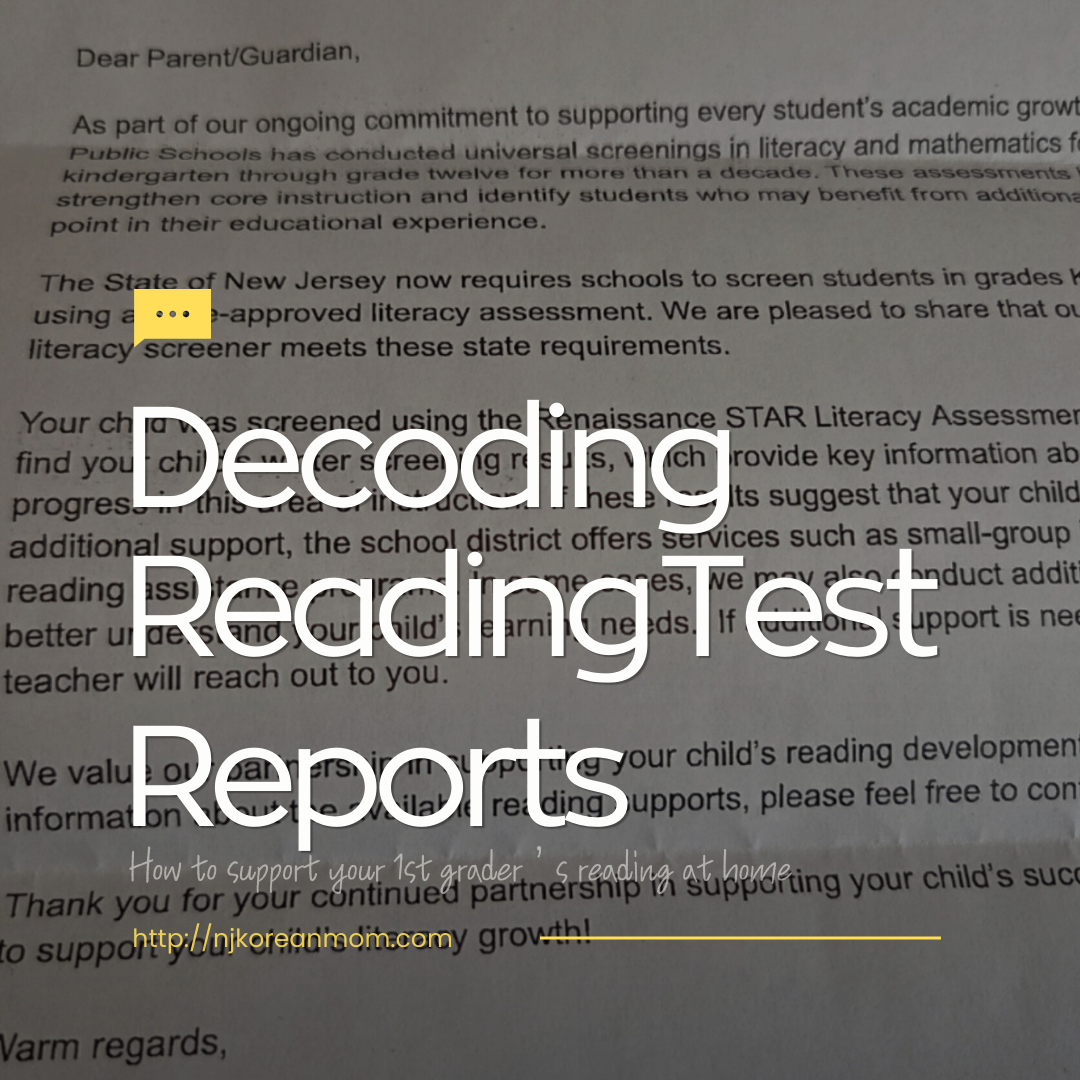
Are you feeling frustrated with your 1st grader’s reading level after looking at the latest school report? You are not alone. Many parents in New Jersey open the Renaissance Star Reading or CBM Caregiver Report only to feel more confused than before.
Understanding these metrics is the first step to moving from frustration to action. As a Fort Lee mom who has analyzed these reports, I’m here to help you decode Star reports and share practical ways to support your child’s reading at home.

Why the 1st Grade Reading Level Matters in NJ
In New Jersey public schools, the transition from Kindergarten to 1st grade is a “literacy leap.” Schools use standardized evaluations to ensure no child falls behind.
- The Benchmark: By the middle of 1st grade, schools expect students to move from “learning to read” (phonics) to “reading to learn” (comprehension).
- Early Intervention: These reports identify if a child needs RTI (Response to Intervention) or extra help from a reading specialist.
How to Decode Star Reports: Key Metrics Explained
Before you panic over a low number, let’s look at the key metrics used by the Renaissance Star Assessment:

- PR (Percentile Rank): This compares your child to other 1st graders across the country. A 99 PR means your child scored higher than 99% of their peers. (Amazing!)
- SS (Scaled Score): Think of this as a ruler. It measures your child’s absolute growth over time. Even if the PR stays the same, an increasing SS means your child is making progress.
- CPM (Correct Per Minute): This measures Fluency. It’s how many words your child can read accurately in 60 seconds.
The Missing Link: Phoneme Segmentation & Letter Sounds
My child’s report showed a relatively low score in Phoneme Segmentation. You might wonder, ‘Why?’
Phoneme Segmentation is the ability to break a word down into its individual sounds. For example, hearing “mop” and identifying the three distinct sounds: /m/ /o/ /p/.
A low score here doesn’t necessarily mean a child can’t read; rather, it indicates a need to strengthen their phonemic awareness. I personally think of it as ‘ear training’ for the brain — a vital foundation that paves the way for long-term spelling and decoding success.
3 Simple Ways to Help at Home (No Homework Stress!)
You don’t need to be a certified teacher to help. Here are three quick activities recommended by school literacy specialists:

- The Clap-and-Snap Game: While driving or making dinner, say a word like “cat.” Have your child clap for every sound they hear (/c/-/a/-/t/ = 3 claps). It’s a great way to practice Phoneme Segmentation on the go.
- Nonsense Word Fun: Create “alien words” like mez or cav. Since these aren’t real words, your child can’t rely on memory—they must use their letter-sound knowledge to decode them.
- Shared Reading (Echo Reading): Read a sentence aloud with expression, then have your child “echo” it back to you. This builds confidence and models what fluent reading sounds like.
Final Thoughts: It’s a Roadmap, Not a Final Grade
The most important thing to remember is that a Winter Screening is just a snapshot. It’s a tool for teachers (and us!) to see where the ‘gaps’ are so we can fill them before 2nd grade.
My Personal Take: When I first saw my daughter’s ‘Intervention’ score in phonemes despite her high overall reading level, I’ll admit—I felt a bit of mom-guilt. But then I realized: this is exactly why we test! It’s not a grade; it’s a roadmap.
Mom-to-Mom Tip: If your child scored ‘At Benchmark’ in reading but ‘Intervention’ in phonemes, celebrate the win and just spend 5 minutes a day on simple sound games. In our house, we do ‘Sound Tapping’ while waiting for the school bus or during our drive to Target. Those small, consistent moments have made such a difference in her confidence. You’ve got this, Mama! We’re all in this together.”
How did your child’s Star Report look this winter? Are there any terms you’re still confused about? Let’s chat in the comments below!
[More on NJ 1st Grader Reading Levels?]