
The Literacy Revolution in New Jersey Classrooms
If you have a first grader in a New Jersey public school, your dining table is likely covered with worksheets featuring an owl named Echo and strange markings like scoops and smiles. At the heart of NJ phonics teaching in New Jersey is Wilson Fundations, a program that moves beyond simple memorization to a systematic, “Science of Reading“ approach.
As a fellow NJ mom, I initially found the homework confusing—why is my child tapping their fingers, and what do all these lines mean? Today, I’m breaking down the Fundations “code” based on my child’s actual 1st-grade homework.

1. Decoding the “Tapping” Technique: The Multisensory Secret
One of the first things I noticed was my child tapping her fingers. In the Wilson method, this is called “Tapping out the sounds.” It’s a multisensory tool that helps children break a word down into its individual sounds (phonemes) before blending them together.
- How it Works: Children use their dominant hand to tap their fingers to their thumb for each sound they hear.
- The Digraph Rule: For words like “punch” or “bench” (found in Unit 8), the ‘ch’ is a digraph—two letters making one sound. Even though there are two letters, they get one tap (usually the middle finger and thumb together).
- The Blend Rule: For words like “shelf” or “trim,” each letter makes its own sound. Therefore, each letter gets its own separate tap.
- Blending: After tapping each sound, the child slides their thumb across all fingers to “zip” the word together.
2. Mastering the “Marking” System: A Parent’s Cheat Sheet
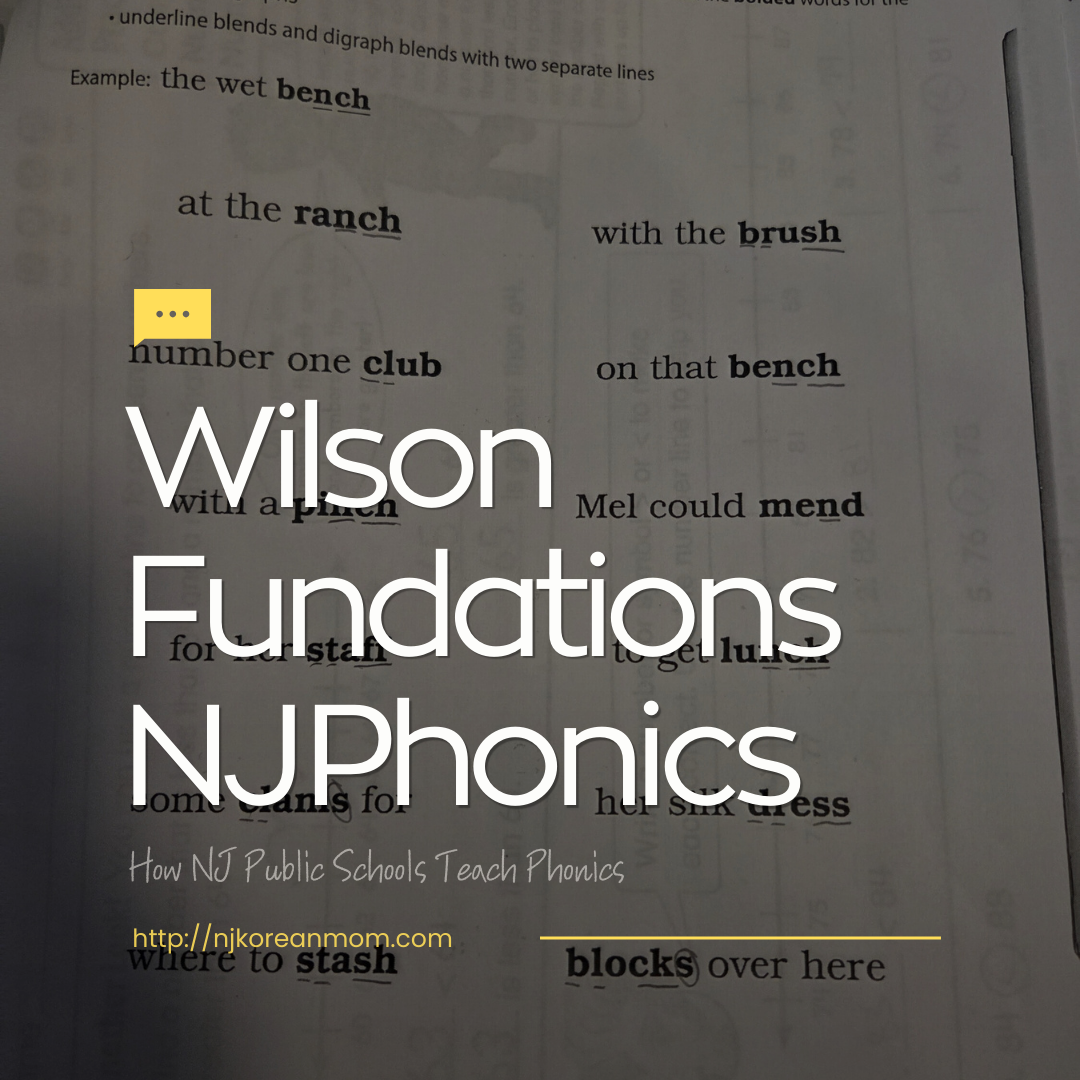
Based on the Unit 8 and Unit 9 homework my child brought home, the marking system is where parents often get stuck. These symbols are the “secret code” that tells a teacher (and you!) that the child understands the structure of the word.
A. Underlining (Digraphs vs. Blends)
- One Continuous Line: Draw one line under a Digraph (sh, ch, th, ck, wh). This shows the child knows these two letters act as a single unit of sound.
- Two Separate Lines: Draw two short, individual lines under a Blend (like ‘cl’ in club or ‘st’ in staff). This confirms the child hears both distinct sounds.

B. The Breve ( ˘ ) and the Scoop ( ⌣ )
- The Breve: This little “smile” goes over the vowel to signify it is a short vowel sound. In Unit 9, we focus heavily on short ‘i’ and ‘u’.
- The Scoop and ‘c’: We scoop the entire word to show it is one syllable. Under that scoop, we write a small ‘c’ to identify it as a Closed Syllable.
- What is a Closed Syllable? It’s a syllable that ends in a consonant, which “closes in” the vowel and forces it to make its short sound (e.g., m-u-n-ch).
3. Deep Dive into Units 8 & 9 Homework: A Real-Life Example
Let’s look at the actual worksheets my NJ first grader completed recently.
- Junior Word Detective (Unit 9): In words like “chimp” or “shrug,” the child must identify the short vowel and the closed syllable. It’s not just about reading; it’s about analyzing. Notice how the ‘m’ and ‘n’ in the middle of words (like film or mend) can be tricky—this is where the tapping becomes a lifesaver.
- Phrase Reading (Unit 8): Reading phrases like “some clams for her silk dress” helps transition from single words to fluent reading. The marking continues here to ensure they don’t lose the phonics rules while focusing on the sentence.
4. Supporting Your 1st Grader: Practical Tips for NJ Moms
How can we, as parents, make “Fundations Time” less stressful?
- Use the Language of the Classroom: Instead of saying “Sound it out,” try using the Fundations-specific prompt: “Can you tap that word out for me?”
- Respect the Writing Grid: Fundations uses four specific lines: Skyline, Plane line, Grass line, and Worm line. If your child is struggling with letter formation, reminding them that ‘g’ is a “worm line letter” provides a clear visual cue.
- Spot the “Trick Words”: Words like said, of, was, and the are “tricky” because they don’t follow the rules we tap out. We call these Trick Words. Make a game out of finding them in your bedtime stories.
- Practice “Sky Writing”: If they are stuck on a letter or a trick word, have them “write” it in the air using their whole arm. This large motor movement helps with memory retention.

Conclusion: Building a Lifelong Love for Reading
Wilson Foundations is truly the heart of NJ phonics teaching in New Jersey. While the markings and tapping might seem complex at first, they are providing our children with a “toolbox” they can use for the rest of their lives. Instead of memorizing thousands of words, they are learning the logic of the English language.
As a mom in New Jersey, I’ve found that being an active partner in this learning process—understanding the ‘scoops,’ ‘breves,’ and ‘taps’—makes a world of difference in my child’s confidence. Over the past several months, I’ve realized that mastering these simple yet effective methods has made her literacy journey so much smoother. It’s exactly why I’ve become such a strong supporter of the Wilson Fundations program.
What has been your biggest challenge with Fundations homework? Are you a fan of the “Tapping” method? Share your thoughts and tips in the comments below!
[More on NJ 1st Grader Education?]