
As a mom living in the heart of New Jersey, I know exactly how the “Kindergarten Readiness” season feels. We live in an area where education is a top priority, and the pressure to ensure our children are “school-ready” can sometimes feel overwhelming.
Whether your child is attending a local Pre-K in Fort Lee or getting ready for the transition to a New Jersey public elementary school, there is one milestone that often causes the most stress: Early Literacy.
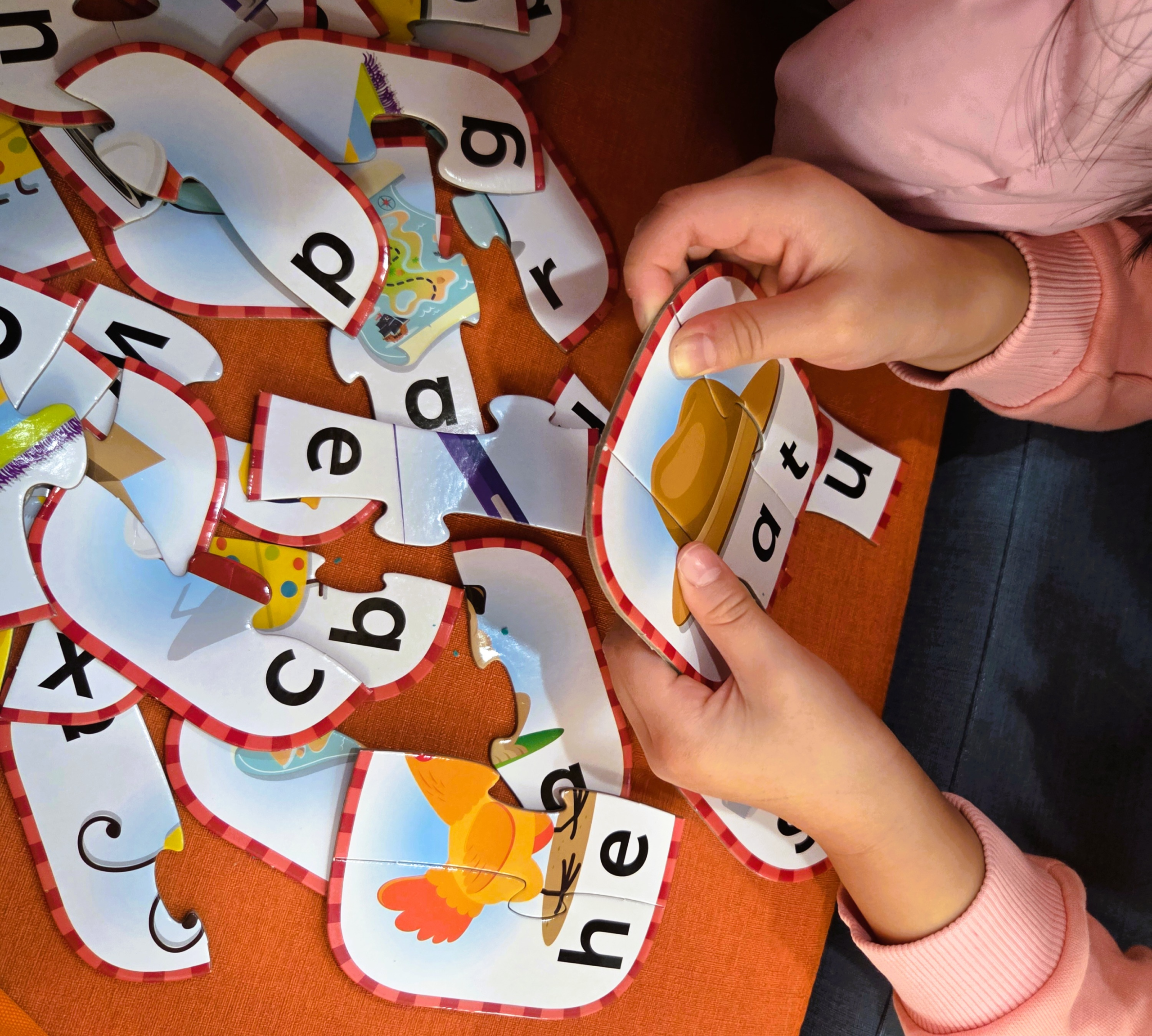
If your child knows their letter sounds but struggles to blend them into actual words, you aren’t alone. I was in the same boat with my second child until I discovered a simple, $11 tool that changed everything: the Learning Resources 3-Letter Word Puzzle Cards.

The “Blending” Wall: Why Some Children Struggle
Many children are great at the “ABC song” and can identify individual letters. However, there is a massive cognitive leap between knowing that C says “cuh” and A says “ah” and T says “tuh,” and actually putting them together to say “CAT.”
This is known as blending, and for many struggling readers, it feels like hitting a brick wall. Traditional flashcards often make this process feel like a chore, leading to frustration for both the parent and the child.
What Makes This Puzzle a “Game-Changer”?
After trying various apps and workbooks, I realized my child needed something tactile. Here is why the Learning Resources 3-Letter Word Puzzle Cards became our go-to solution.
1. The Magic of Self-Correcting Design
The most brilliant feature of these puzzles is that they are self-correcting. Each 3-piece puzzle is cut uniquely. This means the letter “C” will only physically fit with the “A” and “T” belonging to the “CAT” puzzle.
Why does this matter?
- Independence: My child can practice without me hovering over them.
- Confidence: Instead of me saying, “No, that’s wrong,” the puzzle itself provides the feedback. If it doesn’t fit, they simply try another piece. This builds resilience and a “growth mindset” from an early age.
2. Mastering CVC Words (The Building Blocks of Reading)
These puzzles focus on CVC words (Consonant-Vowel-Consonant). In the world of phonics, CVC words are the “secret code” to reading. Once a child masters the rhythm of blending these three sounds, their confidence skyrockets, and they begin to realize they can actually read books.
3. Tactile and Visual Learning
In an age of iPads and screens, there is something irreplaceable about physical cards. The illustrations on these cards are vibrant and clear, providing a visual cue that reinforces the word’s meaning. For a child in Pre-K, being able to touch, move, and snap the pieces together makes the abstract concept of “reading” feel much more concrete.
Real-Life Usage: A New Jersey Mom’s Perspective
Living in NJ, our schedules are often packed. I’ve found these puzzles to be a lifesaver in several scenarios:

- The “Busy Bag” Solution: They come in a sturdy storage box, making them perfect to bring along for long car rides or while waiting at a sibling’s after-school activity.
- Winter Indoor Play: During those freezing New Jersey winter days when the kids are stuck indoors, this is an “educational toy” that actually keeps them occupied for more than five minutes.
- Pre-K Home Reinforcement: If your child is in a local Pre-K program, these puzzles perfectly align with the curriculum they are likely seeing in class.
The “Library Magnet” Effect: Kids (and Moms) Love It!
I recently brought these puzzle cards to the local library while waiting for my older child to finish his class. I thought it would just be a quiet way to keep my preschooler occupied, but something amazing happened.
Within minutes, a few other preschoolers at the library started gathering around our table. They were fascinated! Even kids who didn’t know each other began working together to find the matching pieces. I had several moms come up to me and ask, “Where did you get those? They are so engaged!” Seeing a group of 4-year-olds choose phonics puzzles over running around the library was all the proof I needed. It’s not just an educational tool; it’s genuinely fun and magnetic for kids this age.
The Verdict: Is It Worth It?
At the current price point of around $11, this is one of the best investments I’ve made for my child’s education.
Pros:
- Extremely affordable (cheaper than two lattes!).
- Durable, thick cardboard that survives toddler hands.
- Builds fine motor skills alongside literacy.
- High engagement—my child actually asks to play with them.
Cons:
- I wish there were more than 20 words in the set! (Once they master these 20, you’ll find yourself wishing for a Level 2 set immediately).
Final Thoughts
If you are worried about your child’s reading progress, my advice is to take the pressure off. Stop the forced memorization and bring back the joy of discovery. These Learning Resources 3-Letter Word Puzzles turn a complex skill into a fun, rewarding game.
Are you preparing your little one for Kindergarten this year? What are your favorite “hacks” for teaching phonics at home? Let’s chat in the comments below!
[More Learning Tips?]