
As a mom living in New Jersey, I’ve realized that parenting is often a series of “hunts.” Sometimes we’re hunting for the best organic snacks, sometimes for the right tennis lessons, and lately, I’ve been on a mission to find the perfect sight word workbook for my 4-year-old.
If you have a child in Pre-K, you know exactly what I’m talking about. It’s that stage where they start pointing at signs on Route 4 or labels in the grocery store, asking, “What does that say?” My youngest has reached that “magic window” of curiosity, and I wanted to find a resource that would support this interest without making it feel like “school” too early.
So, last weekend, I headed to the Barnes & Noble at The Shops at Riverside in Hackensack. It’s one of my favorite locations because the children’s section is spacious, and I can really take my time flipping through the books before making a decision.
Why Sight Words? (The Pre-K Milestone)
Before I dive into the “hunting” process, I want to share why I’m focusing on sight words right now.
In our school district and across many New Jersey public schools, Kindergarten readiness is a frequent topic among moms. Sight words, or high-frequency words, are those words that appear most often in books but often don’t follow standard phonetic rules (like the, said, you, or was).
For my 4-year-old, learning these words “on sight” is like giving her a secret key to reading. It builds her confidence instantly. Instead of struggling to sound out every single letter, they recognize the word as a whole, which makes the transition to actual reading much smoother.
The Scouting Mission: Comparing the Giants
When I reached the workbook aisle in Hackensack, I was reminded of just how many options we have. It can be totally overwhelming! I spent a good hour comparing four of the biggest names in the education world: Brain Quest, Kumon, Scholastic, and Spectrum.
1. Brain Quest: The Versatile Choice
We already use Brain Quest decks for car rides, so I’m a fan of the brand. Their workbooks are great because they cover everything—math, English, and even science. If you would like to know more, please check [My review on the Brain Quest Phonics].

- The Impression: While I love the variety, it felt a little too “broad” for what I needed. I wanted a workbook that focuses purely on literacy and word recognition rather than a mix of everything.
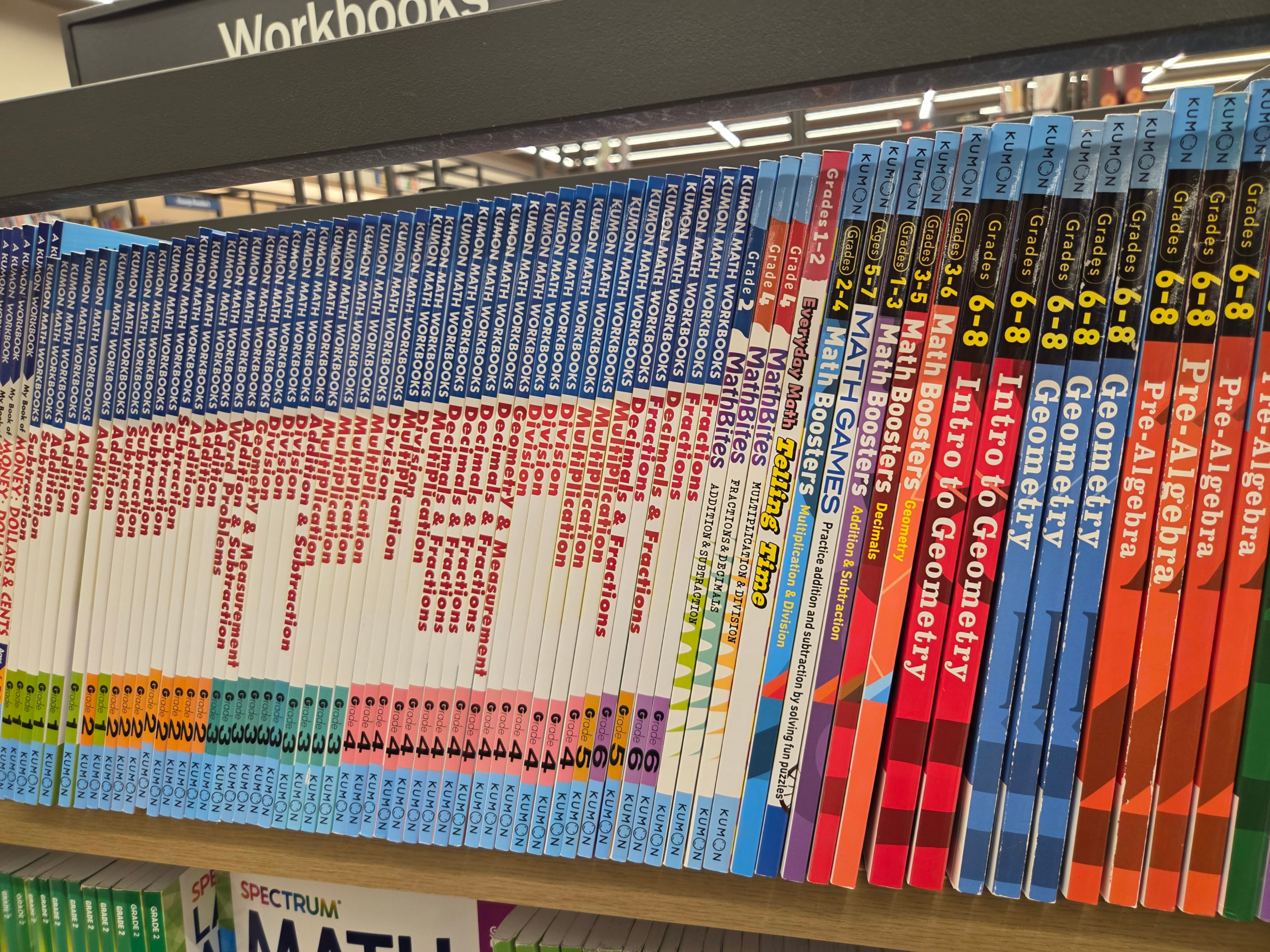
2. Kumon: The Repetition King
Everyone knows Kumon. It’s the gold standard for “practice makes perfect.” Their books are excellent for fine motor skills like tracing and writing.

- The Impression: Kumon is great if your child needs a lot of repetition to remember things. However, I felt it might be a bit too “drill-heavy” for my 4-year-old’s current energy level. I wanted something that felt slightly more like a bridge to a classroom setting.
3. Scholastic: The Fun & Colorful Option
Scholastic is synonymous with school book clubs. Their workbooks are incredibly bright and filled with cute illustrations.
- The Impression: These are very inviting. If your child needs a lot of visual stimulation to stay focused, Scholastic is a winner. For us, though, I sometimes find the pages a bit too busy, which can distract my little one from the actual words.
The Winner: Why I Chose “Spectrum Sight Words”
After narrowing it down, I finally chose Spectrum Sight Words (Grade Pre-K). Here is why this specific book won the “hunt” for me:

1. The Structured “Trace-Read-Write” Approach
The layout of the Spectrum book is incredibly logical. It introduces one or two words at a time and follows a consistent pattern: you trace it, you read it in a sentence, and then you try to write it. This “scaffolded” approach is exactly how children build long-term memory. It felt intentional and well-paced.
2. High-Frequency Focus
Some books include words that aren’t really “sight words.” Spectrum sticks to the essentials—the words my child will actually see in their first-grade brother’s books. It felt like a direct path to Kindergarten readiness.

3. Clean and Uncluttered Design
I loved that the pages weren’t overwhelming. There’s enough white space for a 4-year-old to focus on the task without getting lost in the drawings. It feels “academic” in a gentle, age-appropriate way.
4. Alignment with Public School Standards
As a mom whose older child is already in the NJ public school system, I’ve seen the curriculum. Spectrum has a reputation for aligning with these standards, which gives me peace of mind that we aren’t practicing things that are irrelevant.
My Game Plan for Home-Learning
We haven’t officially cracked open the first page yet, but I already have a plan for how to use this new “trophy” from my hunt.
- The 10-Minute Habit: We aren’t going to sit for an hour. My goal is just 10 minutes a day. Just enough to build a habit without it becoming a power struggle.
- Celebratory Stickers: I’m a big believer in the “sticker economy.” Every page completed deserves a gold star!
- Real-World Hunting: Once we learn a word in the book, we’re going to go on a “word hunt” in our favorite picture books that night before bed.
Final Thoughts for My Fellow NJ Moms
If you’re feeling a bit lost in the workbook aisle at the Hackensack Barnes & Noble, my biggest advice is to think about your child’s personality. Do they need the colors of Scholastic, the repetition of Kumon, or the structure of Spectrum?
For us, Spectrum was the clear winner for this stage of our journey. It feels like a solid foundation for my child to start their reading adventure with confidence.
What about you? Have you started “hunting” for workbooks yet? What brands have worked best for your little ones? Let’s chat in the comments!
📍 [Related Post]