
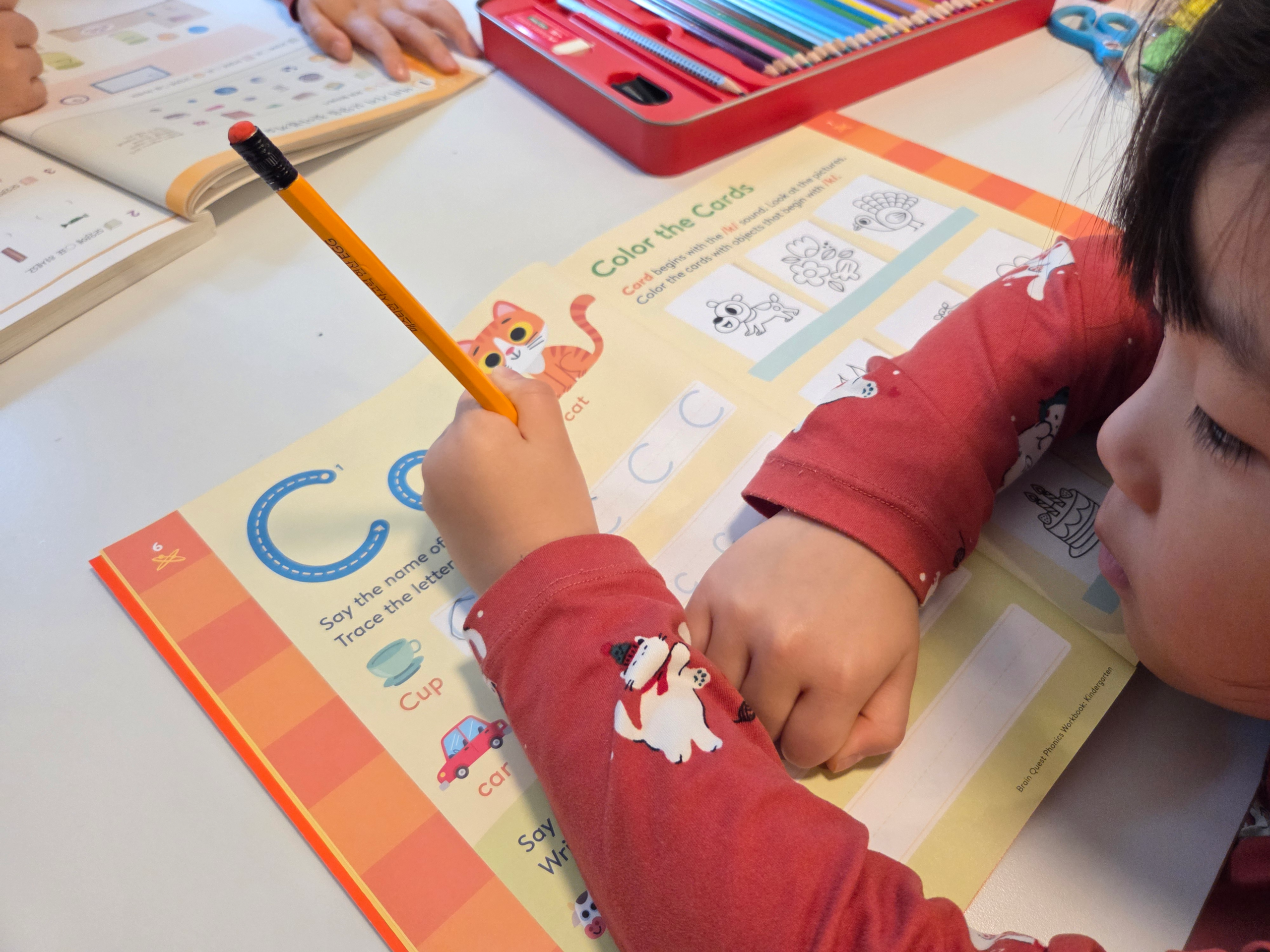
“As a Korean mom who recently moved to the U.S., I’ll admit I struggled at first to find the right resources for my first grader and preschooler’s phonics learning. After some trial and error, I started using Brain Quest Phonics for our homeschooling—and the results have been amazing!
While the colorful, kid-friendly pages turned our phonics journey into a fun activity for my two girls, it was the systematic teaching methods and my strategic leveling that truly made a difference. These workbooks have helped them build a solid foundation for early literacy. In this post, I’ll share my honest experience and some ‘mom pro-tips’ for other parents out there who are searching for the perfect phonics resources just like I was.
Why We “Level Up”
In our household, we’ve found that the standard grade-level workbooks sometimes repeat what the kids are already mastering in their classrooms.

- Pre-K Child (Using Kindergarten Level): My younger one was already showing a strong interest in letters. The Brain Quest Phonics (Kindergarten) book focuses on sound-letter recognition and basic blending, providing the perfect “challenge” without being frustrating. The sight words sections sealed it for me — that’s what made leveling up worth it instead of staying at the easier grade.
- 1st Grader (Using 2nd Grade Level): My older child is currently in 1st grade, but the 2nd Grade Phonics workbook introduces more complex vowel teams and spelling patterns. It bridges the gap between simple reading and true literacy. this version covers advanced elements such as Prefixes, Suffixes, Contractions, and Homophones — all of which are fundamental building blocks for becoming an advanced reader.

Focus on Phonics: The Foundation of Reading
We tried the “All-in-One” Brain Quest workbooks first, but switched to the Phonics-specific series once I noticed my older one needed more repetition on blends than the all-in-one book gave her.
- Systematic Approach: It follows a logical progression that matches the “Science of Reading” often discussed in NJ school districts.
- Engaging Activities: It doesn’t feel like a boring drill. The games and colorful layouts keep them at the table longer than I expected!
- Confidence Booster: Seeing them succeed at a “higher grade” level gives them so much confidence when they go back to their regular schoolwork. It makes them feel like “big kids” taking on big challenges!

A Local Mom’s Trip: Compare Workbooks at the Bookstore
If you’re in Northern New Jersey, the Barnes & Noble at Riverside usually has a massive selection of these. While online shopping is convenient, I highly recommend visiting in person.
I always take the time to flip through the pages of the next grade level up. By comparing the curriculum on the spot, you can see if the concepts are just out of reach (which is good for growth) or too overwhelming. For us, seeing the specific Phonics drills in the Grade 2 book made me realize my 1st grader was ready for the challenge.
Final Thoughts: Transition to the Next Level with the Brain Quest
Don’t feel restricted by the “age” or “grade” printed on the cover. We ended up using the grade-level-up version for one kid and the on-level version for the other — the series flexes either way, which is what made it work for two different readers in the same house.
It’s become a regular part of our “Mom-made English” (엄마표 영어) sessions this year — not flashy, just something we actually stuck with. Watching my kids transform from “decoders” to “readers” has been the most rewarding part of this journey!
🔗 Have you read?