
As a mom of two living in the heart of New Jersey, I’ve experienced that bittersweet moment of receiving the official Kindergarten enrollment letter. If you are a Pre-K parent in NJ, you know exactly what I mean. There is excitement, but there’s also that nagging question in the back of your mind: “Is my child truly ready for the academic expectations of an NJ public school?”
With my oldest now in 1st grade and my youngest currently in a Korean-American Pre-K program, I’ve seen firsthand where the “reading struggle” usually begins. Many parents focus solely on Phonics, thinking that if a child can sound out c-a-t, they can read a book. But then, the “Wall” happens. Your child hits a sentence like: “The cat was on the mat,” and they get stuck on “The,” “was,” and “on.”
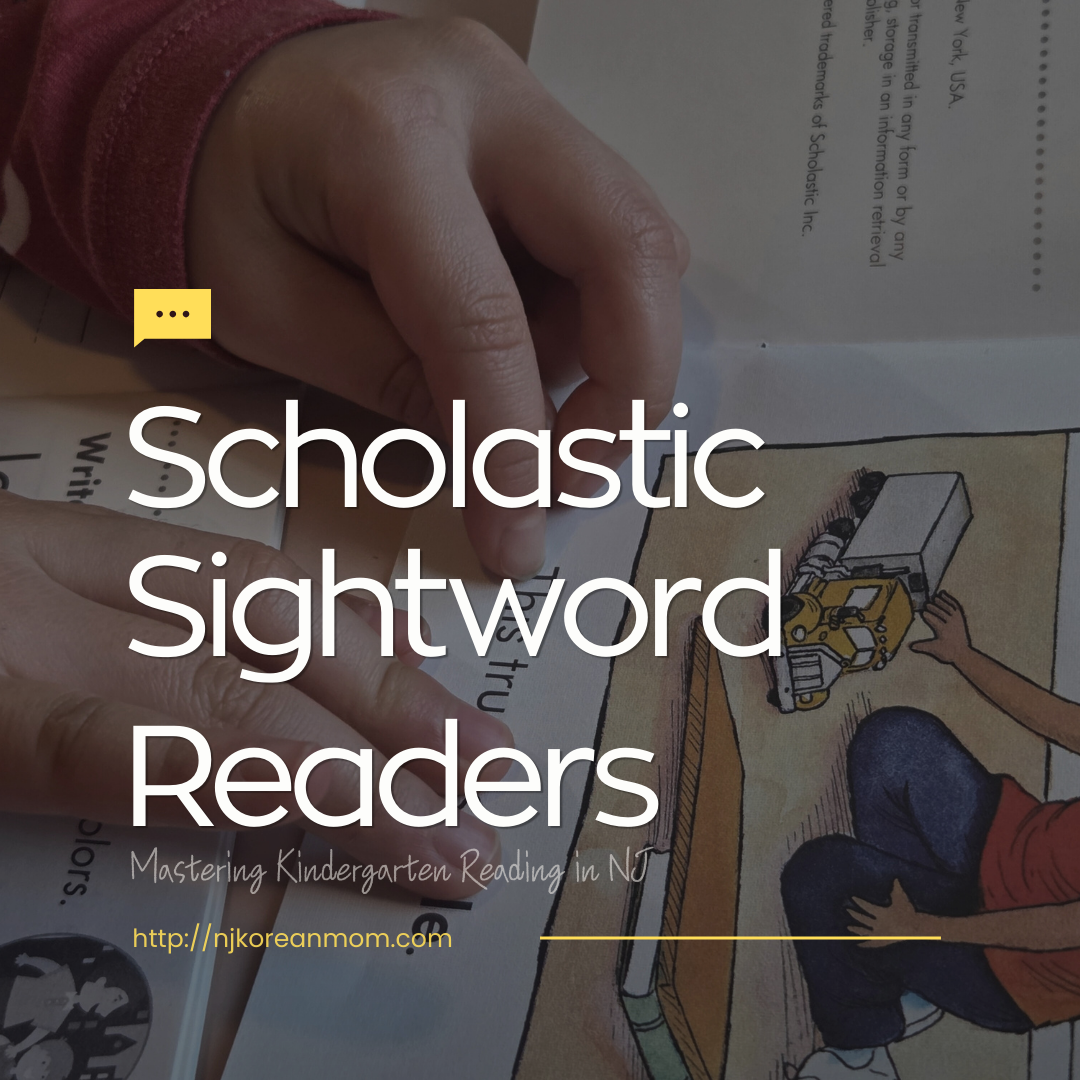
This is where the magic of Sight Words comes in. In this post, I’ll share why Sight Words are the ultimate bridge to reading and how I’m using the Scholastic Sight Word Readers to prepare my second child for the fast-paced NJ Kindergarten curriculum.

The Reality of the NJ Kindergarten Curriculum
New Jersey is known for having some of the best public schools in the U.S., but with that reputation comes high expectations. By the end of Kindergarten, NJ students are often expected to read at a Level C or D (Guided Reading Levels).
This transition from “learning to read” to “reading to learn” happens incredibly fast. If a child enters Kindergarten only knowing their ABCs and basic phonics, they can quickly feel overwhelmed when the class starts moving through high-frequency word lists.
The “Phonics Gap”
Phonics is about decoding—learning that ‘B’ says /b/. However, English is a tricky language. Nearly 50% to 75% of the words in beginning reading material cannot be easily sounded out using basic phonics rules. Words like said, of, does, and the are “rule-breakers.”
If your child has to stop and struggle to decode every single word, they lose the meaning of the story. Their fluency drops, and so does their confidence.

Why Sight Words are the “Missing Piece”
Think of reading as building a house. Phonics are the bricks, but Sight Words are the mortar that holds everything together.
Sight words (also known as high-frequency words) are words that appear so often that they should be recognized instantly, “by sight.” When a child can look at a word and know it immediately without “tapping it out,” three amazing things happen:
- Increased Fluency: They read more smoothly and faster.
- Better Comprehension: Because they aren’t exhausted from decoding, their brain can focus on what is happening in the story.
- Boosted Confidence: “I can read this whole book!” is the most powerful sentence a Pre-K student can say.
The Solution: Scholastic Sight Word Readers
After researching various resources for my first child, I settled on the Scholastic Sight Word Readers box set, and I am now using it again for my second child. Here is why this specific set is a staple in my NJ home:

1. Non-Intimidating Format
The books are tiny—perfect for little hands. For a 4-year-old, a big picture book can feel like a mountain. These mini-books feel like a molehill that they can easily conquer. Each book is only 8 pages long with one short sentence per page. My four-year-old felt such a huge sense of accomplishment after finishing each one. Seeing that ‘I did it!’ look on her face every time she closed a book was priceless.
2. One Target Word at a Time
Each book focuses on a specific sight word (e.g., ‘like,’ ‘go,’ ‘see’). By the time they finish the 8 pages, they’ve seen and read that word at least 8 to 10 times in different contexts. It’s ‘natural repetition’ that feels more like a game than a lesson. This worked wonders for my four-year-old; I even confirmed her progress by playing a separate sight word game afterward, and she nailed the target words every time!
3. Predictive Text and Visual Cues
Scholastic uses highly predictable patterns. For example: “I like the apple. I like the banana. I like the cookie.” This allows the child to use the pictures to “read” the nouns while their brain locks in the sight words I, like, and the.
4. The Bonus Mini-Workbook for Reinforcement
One of my favorite parts of this set is the included mini-workbook. While the 25 little books focus on reading, the workbook encourages writing. It provides simple tracing and writing exercises for each sight word they’ve just read.
- Why it works: Writing a word helps solidify it in a child’s long-term memory far better than just looking at it.
- NJ Mom Tip: I usually let my child finish the workbook page as a “victory lap” after we’ve read five books. It’s a great way to practice those fine motor skills, which are also a big part of Kindergarten readiness!

Comparison: Phonics vs. Sight Words
To help you visualize the balance, here is a quick breakdown:
| Feature | Phonics (The Sound) | Sight Words (The Bridge) |
| Primary Method | Decoding/Blending sounds | Visual recognition/Memorization |
| Example Words | Cat, Hop, Big, Sun | The, Said, Where, My |
| Role in Reading | Provides the foundation | Provides the speed and flow |
| When to Start | When they know letter sounds | Simultaneously with Phonics |
My 10-Minute “NJ Mom” Daily Routine
Living in New Jersey means life is busy. Between extracurriculars, Korean school, and playdates at the local park, I don’t have an hour for formal lessons. Here is how I fit the Scholastic readers into our daily Pre-K life:
- The “Dinner Appetizer”: While I’m finishing up dinner, I have my child read one mini-book to me. It takes exactly 3 minutes.
- The Sticker Reward: The Scholastic set comes with a sticker chart. Never underestimate the power of a sticker for a Pre-K student! We celebrate every book completed.
- Word Hunting: After reading a book (like the one for “see”), we go on a “Word Hunt” around the house. Can you find the word “see” in this cereal box?
- The Bedtime Encore: Sometimes, instead of me reading a long story, he “reads” three mini-books to me. This role reversal makes him feel like a “big kid” preparing for his new school.
Final Checklist for Kindergarten Readiness in NJ
If you are preparing for the upcoming school year, here is a simple checklist to keep you on track:
- [ ] Letter Recognition: Can identify all uppercase and lowercase letters.
- [ ] Phonics: Knows the primary sound for each letter.
- [ ] Sight Words: Can recognize at least 20-30 basic words (the Scholastic set covers the top 50).
- [ ] Concepts of Print: Knows how to hold a book and that we read from left to right.
- [ ] Confidence: they aren’t afraid to try reading a new sentence.
Closing Thoughts
Preparing for Kindergarten in New Jersey doesn’t have to be a source of stress. By introducing Scholastic Sight Word Readers during the Pre-K years, you are giving your child the tools to cross the bridge from “sounding out letters” to “reading stories.”
When your child walks into their NJ classroom this September, they won’t just have their backpack and lunchbox—they’ll have the confidence of a reader.
Are you preparing your little one for Kindergarten in NJ? What are your favorite reading resources? Let’s chat in the comments below!
[More on Pre-K Sight Word Learning?]